2nd Volumetric Video Challenge
SIGGRAPH Asia 2026 Workshops
Overview
The Volumetric Video Challenge Workshop 2026 aims to accelerate the transition of volumetric video technology from laboratory prototypes to practical, scalable, and deployable systems, supporting advances in immersive and interactive experiences. Following the successful inaugural challenge held at SIGGRAPH Asia 2025, the workshop will feature the second edition of the Volumetric Video Challenge, together with invited keynote talks highlighting the latest developments in volumetric video. This year's challenge focuses on two key problems: volumetric video compression and sparse-view volumetric video reconstruction. The challenge evaluates submissions on an expanded high-quality multi-view benchmark built upon the SIGGRAPH Asia 2025 dataset, with additional SelfCap cases included in the Compression Track.
Publication in the Workshop Proceedings
Winning teams' technical reports will be included in the SIGGRAPH Asia 2026 Workshop Proceedings.
Important Dates (AoE)
Registration Opens
Challenge registration opens
Dataset Release
Challenge dataset released to participants
Submission Deadline
Final participant submissions due
Results Announcement
Challenge results announced
Camera Ready Deadline
Final camera-ready reports due
Workshop & Awards
Workshop and awards ceremony
Awards
Each track features two prizes.
First Prize
$2,500
Per track
Second Prize
$1,500
Per track
Leaderboard
Official rankings based on PSNR, SSIM, and LPIPS metric ranks.
Numbers in brackets are per-metric ranks. Weighted Rank is the average of three metric ranks for Compression and six full-image/foreground metric ranks for Sparse-View. Personal submission accounts are displayed as Name (Registered Team) when a registration match is available.
Compression Track
Final Results| # | Team | PSNR | SSIM | LPIPS | Rank Sum | Weighted Rank |
|---|---|---|---|---|---|---|
| 🥇 1 | PICOMR | 27.50316 [1] | 0.90483 [1] | 0.20208 [1] | 3 | 1.000 |
| 🥈 2 | Xipeng Fan (SZUHCR) | 27.38430 [2] | 0.90042 [2] | 0.23734 [3] | 7 | 2.333 |
| 3 | CheerUp | 26.21281 [3] | 0.88932 [5] | 0.25452 [4] | 12 | 4.000 |
| 4 | Hanyang Kong (KingKong) | 25.59877 [6] | 0.89183 [4] | 0.23405 [2] | 12 | 4.000 |
| 5 | fnYang | 25.98308 [4] | 0.89353 [3] | 0.27066 [6] | 13 | 4.333 |
| 6 | Batofgo | 25.83060 [5] | 0.88658 [6] | 0.26538 [5] | 16 | 5.333 |
| 7 | SceneCodec | 23.23818 [7] | 0.82215 [8] | 0.31104 [7] | 22 | 7.333 |
| 8 | AlgorithmEngineering | 20.74934 [8] | 0.82937 [7] | 0.32213 [8] | 23 | 7.667 |
Sparse-View Track
Final Results| # | Team | PSNR | SSIM | LPIPS | fgPSNR | fgSSIM | fgLPIPS | Rank Sum | Weighted Rank |
|---|---|---|---|---|---|---|---|---|---|
| 🥇 1 | Shengqi Wang (MetaverseAI) | 30.04181 [1] | 0.91765 [7] | 0.17940 [1] | 27.88172 [1] | 0.87217 [2] | 0.21208 [1] | 13 | 2.167 |
| 🥈 2 | Yunqi Gao (SparseSight) | 29.15414 [2] | 0.93633 [1] | 0.19749 [3] | 26.86454 [3] | 0.88393 [1] | 0.24424 [4] | 14 | 2.333 |
| 3 | Doreen071 | 27.04109 [5] | 0.92867 [2] | 0.20912 [4] | 25.77871 [4] | 0.85172 [5] | 0.22394 [2] | 22 | 3.667 |
| 4 | Hanyang Kong (KingKong) | 28.75386 [3] | 0.92641 [3] | 0.22858 [5] | 27.22512 [2] | 0.86274 [4] | 0.28640 [8] | 25 | 4.167 |
| 5 | RecGen4D | 25.67381 [6] | 0.92059 [6] | 0.24612 [8] | 25.56873 [5] | 0.86308 [3] | 0.28950 [9] | 37 | 6.167 |
| 6 | dari | 25.24633 [7] | 0.92378 [4] | 0.23741 [6] | 24.57443 [8] | 0.82631 [12] | 0.24534 [5] | 42 | 7.000 |
| 7 | Random | 25.22431 [8] | 0.91293 [10] | 0.27199 [11] | 24.93789 [6] | 0.84133 [9] | 0.25682 [7] | 51 | 8.500 |
| 8 | June Kim (SNOW) | 24.80104 [10] | 0.92240 [5] | 0.23788 [7] | 24.11465 [11] | 0.84532 [6] | 0.40322 [13] | 52 | 8.667 |
| 9 | mmm | 24.99320 [9] | 0.91218 [11] | 0.27221 [12] | 24.93354 [7] | 0.84135 [8] | 0.25668 [6] | 53 | 8.833 |
| 10 | Mingjian Liang (MingzaiTeam) | 27.83229 [4] | 0.91729 [8] | 0.24975 [9] | 23.91924 [12] | 0.82732 [11] | 0.39530 [12] | 56 | 9.333 |
| 11 | Oleg Semer (SlK) | 24.20276 [11] | 0.88650 [16] | 0.19430 [2] | 23.66514 [13] | 0.79320 [14] | 0.22562 [3] | 59 | 9.833 |
| 12 | AwesomeGS | 24.19371 [12] | 0.91335 [9] | 0.28096 [15] | 24.28803 [9] | 0.84229 [7] | 0.38343 [11] | 63 | 10.500 |
| 13 | RiseOfTheWhiteSun | 23.24979 [14] | 0.90403 [14] | 0.26217 [10] | 24.18268 [10] | 0.83892 [10] | 0.31215 [10] | 68 | 11.333 |
| 14 | vvc_bbg | 23.71288 [13] | 0.91130 [12] | 0.28468 [16] | 21.96568 [14] | 0.81148 [13] | 0.54333 [16] | 84 | 14.000 |
| 15 | Guangmin Gao (Laosou1Wash1Wantong) | 22.82178 [16] | 0.90371 [15] | 0.27626 [13] | 21.58114 [15] | 0.79055 [16] | 0.46056 [14] | 89 | 14.833 |
Workshop Schedule
December 2, 2026 · 09:00–12:15 MYT
KLCC, Kuala Lumpur, Malaysia · Meeting room TBA
| Time (MYT) | Program | Duration |
|---|---|---|
| 09:00–09:30 | Welcome Remarks, Challenge Results & Awards | 30 min |
| 09:30–10:10 | Winning Team Talks: PICOMR, SZUHCR, MetaverseAI, SparseSight | 4 × 10 min |
| 10:10–10:25 | Break | 15 min |
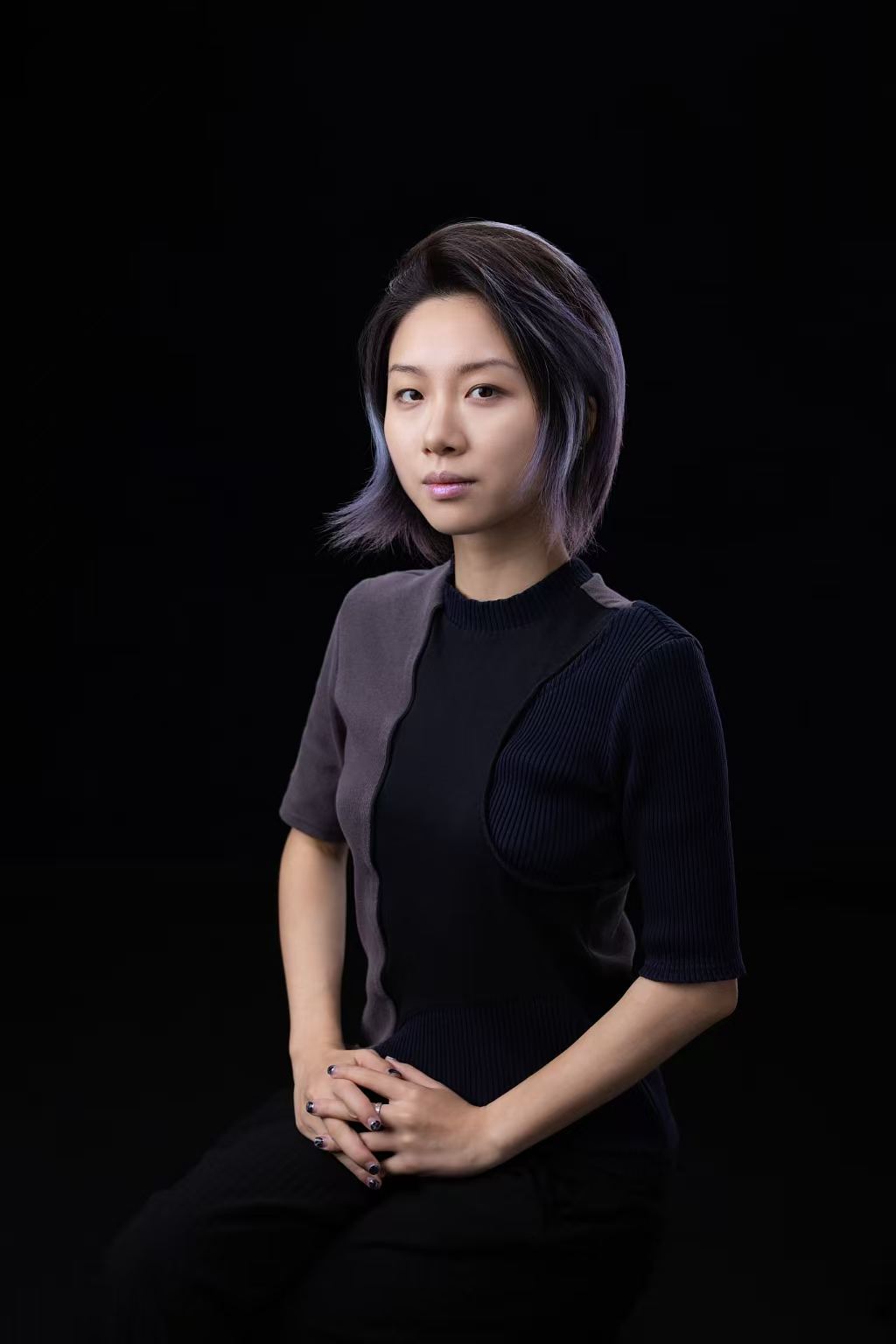
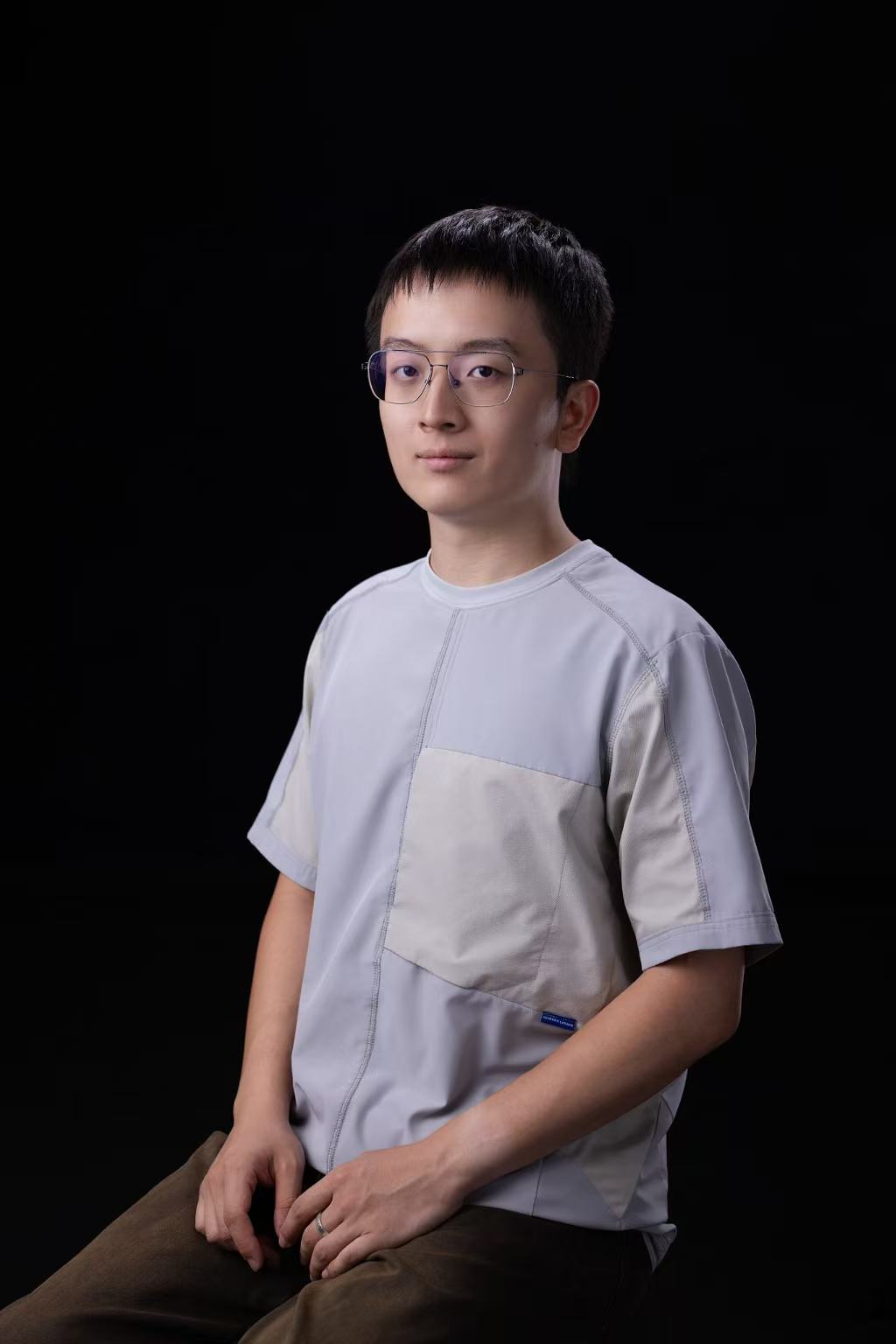
| 10:25–10:55 | Invited Talk: Yuan Liu | 30 min |
| 10:55–11:25 | Invited Talk: Yuqi Zhang & Shixin Tao | 30 min |
| 11:25–11:55 | Invited Talk: Ziwei Liu | 30 min |
| 11:55–12:15 | Invited Talk: Jiaming Sun | 20 min |
Invited Speakers

Challenge Tracks
Compression Track
Reconstruct a dynamic 4DGS-style representation under the 200 KB/frame scene-dependent artifact limit, then render complete RGB images from test viewpoints.
- Input: Calibrated multi-view RGB videos.
- Resources: Training/test camera parameters and synchronization metadata.
- Test cases: Both SIGGRAPH Asia and SelfCap cases are required.
- Submission: Rendered test views, model artifacts, rendering scripts, and a technical report.
Sparse-View Track
Reconstruct a dynamic volumetric human from six calibrated training views, then render complete RGB images from test viewpoints.
- Input: Calibrated training-view RGB videos.
- Resources: Training/test camera parameters and synchronization metadata.
- Submission: Rendered test views and a technical report.
Dataset
The VVC26 dataset contains calibrated dynamic multi-view RGB videos. Baseline training code will be provided for use in both tracks.
Important Test-Set Update
Compression Track: SelfCap data are required. Please submit results for all released SIGGRAPH Asia and SelfCap test cases, including 0512_bike, 0525_corgi, and 0811_yoga.
Sparse-View Track: Due to a data leakage issue, the following SelfCap cases have been removed from the test set: 0512_bike, 0525_corgi, and 0811_yoga.
For the Sparse-View Track only, do not submit results for these three cases; submit results only for the remaining valid test cases. We apologize for any inconvenience and appreciate your understanding.
Compression Track
The Compression Track includes both SIGGRAPH Asia and SelfCap sequences. Each sequence provides calibrated multi-view training RGB videos, training and test camera parameters, and synchronization metadata.
Sparse-View Track
Each sequence includes calibrated training-view RGB videos, training and test camera parameters, and synchronization metadata.
Compression Track Structure
sequence/
├── images/              # training-view RGB frames
│   ├── 00/000000.jpg
│   └── ...
├── train_intri.yml      # training camera intrinsics
├── train_extri.yml      # training camera extrinsics
├── test_intri.yml       # test camera intrinsics
├── test_extri.yml       # test camera extrinsics
└── time_offsets.json    # camera/frame synchronization
Sparse-View Track Structure
sequence/
├── images/              # training-view RGB frames
│   ├── 00/000000.jpg
│   └── ...
├── train_intri.yml      # training camera intrinsics
├── train_extri.yml      # training camera extrinsics
├── test_intri.yml       # test camera intrinsics
├── test_extri.yml       # test camera extrinsics
└── time_offsets.json    # camera/frame synchronization
Evaluation
Metrics: Average PSNR, SSIM, and LPIPS across all official test views from all scenes.
Compression Track: Metrics are computed on the full RGB images, including foreground and background regions.
Sparse-View Track: Metrics are computed separately on the full RGB images and the foreground regions.
Sparse-View Final Score
The full-image score and foreground score have equal weights in the final Sparse-View ranking.
For each region, the rank is computed from PSNR, SSIM, and LPIPS with equal weights.
Compression Track Eligibility
To qualify for ranking, the average size per frame of a submission's scene-dependent artifacts must be below 200 KB/frame. The average size per frame is calculated as the total size of these artifacts divided by the number of frames.
Scene-dependent artifacts include all files required for rendering that are specific to the submitted scene. Shared scene-independent code or pretrained backbones may be excluded from this calculation after organizer review.
Detailed Requirements
Compression Track
Provided Data
- Training-view RGB videos or frames.
- Training and test camera parameters.
- Time offsets or synchronization metadata when needed.
- Both SIGGRAPH Asia and SelfCap cases are required.
Requirements
- Final representation must be below an average 200 KB/frame.
- Render full-RGB JPEG images for all official test views at frame indices 0, 10, 20, ....
- Submit model artifacts, rendering scripts, environment file, rendered results, and a draft technical report.
- Winning teams submit final ACM-formatted technical reports for inclusion in the SIGGRAPH Asia workshop proceedings.
Sparse-View Track
Provided Data
- Calibrated training-view RGB videos or frames.
- Training camera intrinsics and extrinsics.
- Test camera intrinsics and extrinsics for rendering.
- Time offsets or synchronization metadata when needed.
- The SelfCap cases 0512_bike, 0525_corgi, and 0811_yoga are excluded from submission.
Requirements
- Render full-RGB JPEG images for all official test views at frame indices 0, 10, 20, ....
- Submit rendered results and a draft technical report.
- Winning teams submit final ACM-formatted technical reports for inclusion in the SIGGRAPH Asia workshop proceedings.
Submission Guidelines
Registration and Result Submission
Register through the Google Form, then upload challenge results through the official VVC26 submission portal.
Account identification: Please use either your registration email or your registered Team Name as the submission portal username so that we can identify the team responsible for each upload.
Evaluation Feedback and Submission Interval
Scores Within 4 Hours
After a submission is uploaded successfully, its test-case evaluation scores will be available through the submission portal within four hours.
4-Hour Submission Interval
A four-hour cooldown applies after each submission. The next submission can be uploaded after the cooldown period has ended, so please plan your submissions accordingly.
Required Archive Structure
Upload one archive named submission.zip. The team_name.txt file must contain the exact Team Name used in the registration form. Keep both track folders in the archive and add materials for the track or tracks you enter.
Image format and sampling are mandatory: rendered results must use JPEG format with the .jpg extension. Submit one rendered frame for every 10 source frames at indices 0, 10, 20, .... Filenames must use six-digit zero padding ({frame:06d}), such as 000000.jpg and 000010.jpg.
submission.zip
├── team_name.txt          # exact registered Team Name
├── compressionTrack/
│   ├── data/
│   ├── renders/<scene>/<view>/<frame:06d>.jpg
│   └── code/
└── sparseViewTrack/
    └── renders/<scene>/<view>/<frame:06d>.jpg
Sparse-View Track
- Upload: Full-RGB JPEG renders for every official test view, sampled once every 10 frames at indices 0, 10, 20, ....
- No model, decoder, rendering code, or runtime environment is required.
- Keep the official scene, view, and frame names so that each image can be matched to the ground truth.
sparseViewTrack/
└── renders/
    └── <scene>/<view>/<frame:06d>.jpg
Compression Track
- Upload: Test-view JPEG renders sampled once every 10 frames, the compressed 4DGS/model representation, and a decoder/render script that reproduces the uploaded renders.
- Include submissions for all released SIGGRAPH Asia and SelfCap test cases.
- All scene-dependent models and assets must be stored under data/ and are counted toward the average 200 KB/frame limit.
- Reproducibility check: Put only the decoder, renderer, and environment setup in code/. Do not put scene data in code/ or download scene data when the code runs. For winning teams, we will run the submitted code with the submitted compressed model and compare the new renders with the uploaded test-view images. This check confirms that the uploaded images can be reproduced from the submitted compressed model.
compressionTrack/
├── data/       # compressed model and scene assets
├── renders/
│   └── <scene>/<view>/<frame:06d>.jpg
└── code/       # decoder, renderer, and setup
Runtime Environment
Compression submissions should run in the organizers' baseline environment by default. If only a few additional packages are needed, include their installation commands in the setup step that runs before the render script.
If the environment differs substantially, include a reproducible uv, conda, or Docker specification. Organizers will validate the submitted environment and rendering pipeline for winning teams.
Submission Q&A
Q1. How should the submitted JPEG images be encoded?
To ensure consistent JPEG encoding across all submissions, please use OpenCV's default JPEG writer for every submitted render:
cv2.imwrite('a.jpg', img)Q2. How should camera distortion be handled?
SIGGRAPH Asia data: The images have already been processed for camera distortion. Please use the provided camera parameters directly.
SelfCap data: The cameras contain lens distortion. When rendering your model, use the test-view extrinsics together with the corresponding intrinsic parameters (K, H, and W), but ignore the distortion coefficients. Do not apply lens distortion to the submitted renders.
Evaluation: We will undistort the SelfCap ground-truth images using the original camera calibration and image dimensions. PSNR, SSIM, and LPIPS will be computed only over the valid image region remaining after undistortion.
Q3. What data may be used for each test case?
Pipeline input: For each test case, the entire pipeline may use only the training views provided for that case as input.
Generative-prior training: A generative prior may be trained using the training views released for the same track, but these views may only be used for training the prior, not for reconstructing or directly synthesizing a test case. External datasets are allowed only if they contain no SIGGRAPH Asia or SelfCap data.
Q4. Are multiple submissions allowed, and how are they ranked?
Multiple submissions: Yes. Participants may submit multiple times, subject to the four-hour interval between submissions, and there is no limit on the total number of submissions.
Final score: The final score is based on the latest valid submission.
Q5. How is the Sparse-View Track evaluated?
Two evaluation regions: We evaluate both the full RGB image and the foreground region using PSNR, SSIM, and LPIPS.
Equal weighting: The full-image score and foreground score each contribute 50% to the final Sparse-View score.
Organizers


Contact
For any questions, please contact us at
siggraphasiavvc@gmail.com